
Most emotional D&D scenes do not begin with a sad monologue, a dramatic music track, or a villain revealing something terrible.
They begin earlier, when the table finds a reason to care about a person, place, object, or promise. Then something changes.
You can prepare a funeral, reunion, or hard choice. You cannot prepare the feeling it should produce. A player may respond with grief, anger, relief, suspicion, or a joke that releases the tension. All of those reactions can be honest play.
You can prepare the situation. You cannot prepare the feeling it should produce.
Build the conditions that make a response possible. Give the scene history. Change the meaning of something familiar. Put a real consequence on the table. Then leave enough room for players to inhabit the moment.
Use Anchor, Echo, Change, and Space
This four-part method helps a scene carry emotional weight without deciding how anyone should feel or what the characters must do.
Anchor
What does the table already know from play?
The Lantern House has always felt safe.
Echo
Which familiar detail returns?
The old kettle is still there.
Change
What new pressure demands a choice?
Iven hides a child while the watch approaches.
Space
How will you leave room for the response?
Ask what they do first, then wait.
Anchor: give the moment something the table already knows
Players care most easily about what has become real through play. A beloved NPC is not memorable because the DM announced that they were beloved. The table saw them make a bad joke, offer a favor, betray a confidence, save a character, or show up when it counted.
Before planning an emotional beat, ask: What has the table experienced that gives this moment weight?
An anchor can be:
- A relationship that changed over several sessions.
- A place where the party once felt safe.
- An object that has been useful or personally meaningful.
- A promise someone made and has not kept.
- A familiar habit, phrase, ritual, or piece of information.
The anchor needs to be specific. “The kingdom is in danger” can create urgency, but it rarely carries a personal charge by itself. “The innkeeper who hid the party is packing one bag because soldiers are searching every home on the street” gives the danger a human face.
Echo: bring back a detail without repeating the old scene
Repetition gains power from changed context. A detail that meant comfort earlier can mean loss later. A private joke can become a warning. A trophy can become evidence. The earlier scene gives the table a memory; the new scene asks them to see it differently.
Do not introduce a meaningful locket one minute before it is destroyed. Let the party see it during a quieter scene first. An NPC might turn it over while thinking, a character might use it to identify a family crest, or it might simply sit in a room the party visits often.
Early in the campaign, Nera the courier checks the red thread on her wrist before every dangerous delivery. It becomes familiar, not important.
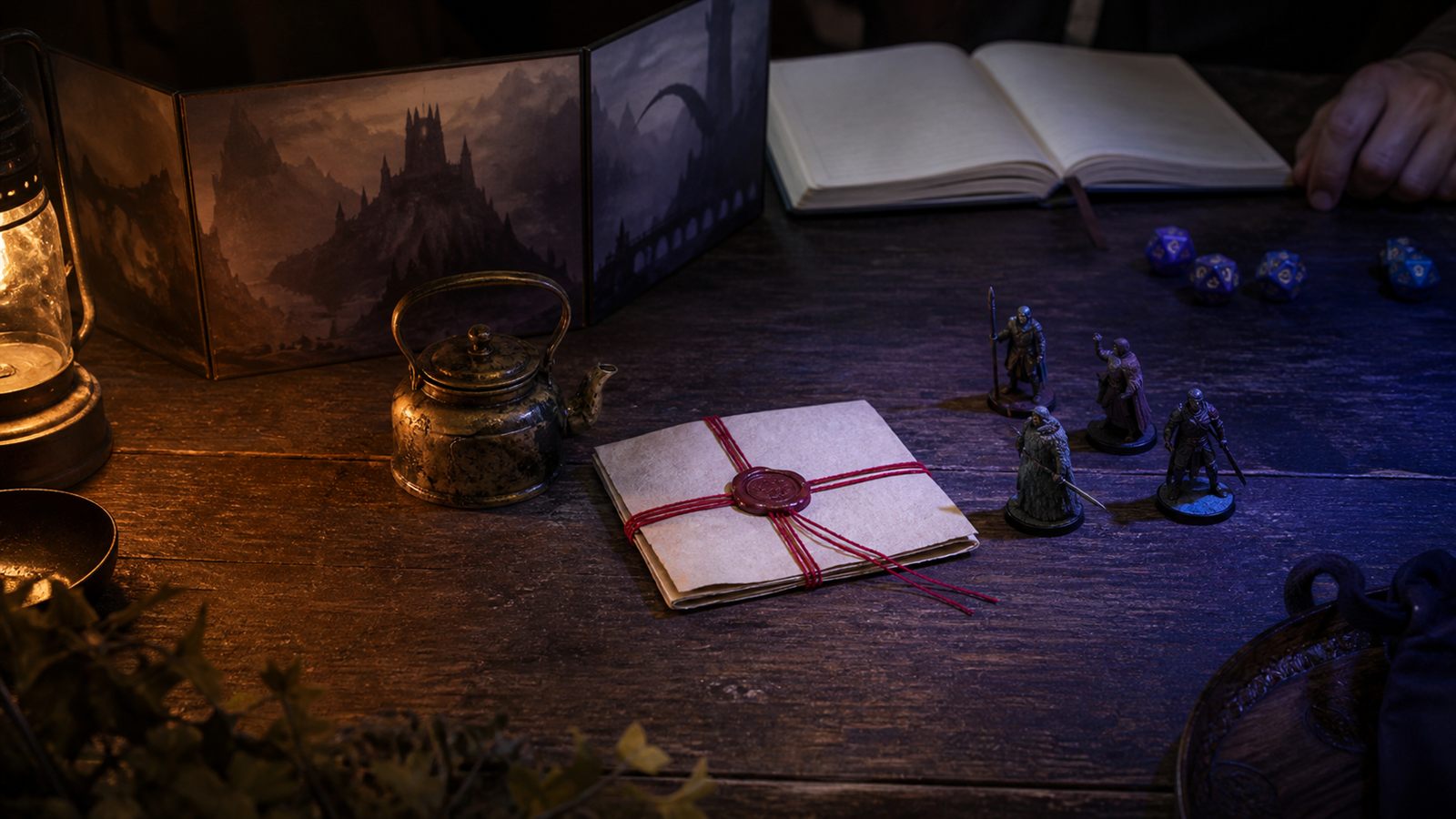
Six sessions later, the party finds the same red thread around a sealed message. Nera has vanished. The thread now makes the message real, personal, and probably dangerous.
The object did not become emotional because it was rare. It connected a present problem to a shared memory.
Use echoes with restraint
An echo should be recognizable, not underlined. Describe the detail plainly and let someone at the table make the connection. If nobody notices, that is fine. It can return again, or simply make the scene more coherent.
Change: make the familiar thing demand a new decision
Nostalgia can be pleasant, but it does not create a playable scene. The change needs to put something at stake now.
- What is different from the last time the party encountered this anchor?
- Who wants something in this scene?
- What will happen if the party does nothing?
- What choice can the characters make that reveals their priorities?
The final question keeps the scene from becoming a cutscene. You are preparing a situation where the response matters, not a reveal for players to watch. The same discipline sits behind scene preparation without railroading.
Example: the safe place is no longer safe
The party has used the Lantern House as a base for months. Its proprietor, Iven, always keeps a kettle on the back stove and asks the same annoying question about their travels.
Do not begin with “The Lantern House has burned down.” That supplies information but gives the party no immediate human pressure.
Instead, show Iven at the locked door with the kettle in hand. He will not let them inside because a fugitive child is hiding upstairs. The local watch is approaching. He needs the party to choose whether to help, leave, bargain, or turn the child in.
The kettle, house, and Iven are the anchors. The locked door changes their meaning. The watch creates pressure. The choice turns the scene into play.
Space: let the table stay with the moment
Many DMs rush past an emotional beat because silence feels dangerous. A player learns a hard truth, and the next guard attacks. An ally dies, and the villain begins a speech. A character returns home, and the scene moves on before anyone can decide what they notice.
Pause instead. Ask one simple, concrete question:
- “What does your character do first?”
- “What do you notice in the room?”
- “Who do you look to?”
- “Do you say anything before you leave?”
Then wait. Some players need a few seconds to find their words. Others answer with an action, change the subject, or show no visible reaction. That is still an answer.
Space also means choosing when to cut away. If a scene ends with a painful choice, do not immediately explain every consequence. End on the choice when the group needs time to absorb it. If the scene needs relief, move to the next practical problem and let the table carry the feeling forward.
A copyable scene card for emotional weight
Use this card when a scene may carry more than ordinary plot weight. Keep each field short.
Anchor
What does the table already know, love, fear, or owe?
Echo
What familiar detail returns, and what did it mean before?
Change
What is different now? Who wants what? What happens if they wait?
Choice
What can the characters do that reveals a priority or costs something?
Space
What will you ask after the choice, and when should you cut away?
EMOTIONAL SCENE CARD

ANCHOR
What does the table already know, love, fear, or owe?

ECHO
What familiar detail returns? What did it mean before?

CHANGE
What is different now? Who wants what? What happens if the party waits?

CHOICE
What can the characters do that reveals a priority or costs something?

SPACE
What question will I ask after the reveal or choice? When should I cut away?

DO NOT WRITE THE PLAYER REACTION.
If you write the character’s emotional reaction or the players’ ideal conversation, you have crossed from preparation into control.
Use the table and your notes
The strongest anchors often come from players. Listen for what they return to without prompting:
- The rival they still mention after a year of play.
- The joke that became a party ritual.
- The small kindness an NPC gave them.
- The place they protect even when it is inconvenient.
- The promise a character keeps bringing up.
Those details show what already has emotional charge. Your notes help recover them, but player attention is the better signal. The player spotlight tracker offers a lightweight way to keep active promises visible.
At the end of a session, write one line under “Things they cared about.” Do not decide whether it will become a plot thread. Record it. A later session may turn it into an anchor.
Match the physical scene to the feeling you want to invite
At a table, you do not control a camera, editing suite, or actor’s close-up. You do control where a scene happens, what the characters can see, and how much sensory information you give them.
Choose details that support the situation instead of decorating it.
- For exposure, put the conversation on an open bridge, in a bright council chamber, or under a crowd’s attention.
- For intimacy, use a quiet watch, cramped carriage, or room after everyone else has left.
- For a familiar place under worse circumstances, keep one or two recognizable details and change the rest.
A room described with every color, smell, and piece of furniture leaves less room for the players’ imaginations. Choose the few details that tell the table what changed.
The Lantern House still smells of cardamom. The hearth is cold. Every chair has been stacked against the wall except one, facing the back stairs.
Let dialogue move, and use sound with restraint
Give dialogue somewhere to travel
Emotional dialogue does not need to be eloquent. It needs to move. Give an NPC a beginning state and an ending state. They may start guarded and become honest, start apologetic and become angry, or begin by trying to persuade the party before admitting they need help.
At the start
Iven wants the party to leave before the watch arrives.
By the end
He asks them to protect the child if they understand the risk.
The conversation can take any route between those points. For more help making that changing state playable, use the NPC motivation card.
Sound can help, but it cannot do the work
A recurring track, a shift in your voice, a dropped dice tray, or a few seconds without background music can focus a scene. Use sound as a frame around something the table already cares about.
Use a recurring theme only if it does not distract. Lower it when a player starts speaking.
Silence after a hard reveal often gives the table more room than another cue.
Ask whether music supports your group’s concentration before making it part of the game. Players should remember the decision they made, not that you pressed play at the right time.
Common emotional-scene mistakes
Creating emotion before attachment
Do instead: Let NPCs have needs, habits, and ordinary time with the party before asking the relationship to carry a major turn.
Making the consequence final too quickly
Do instead: Give players something to do: protect someone, choose whom to trust, search for an answer, or decide what the loss changes.
Explaining the meaning of the scene
Do instead: Describe the evidence. Do not tell a player that their character feels guilty, relieved, or afraid.
Treating silence as failure
Do instead: Ask one concrete question and give the table time. Move on if that is what the group wants.
Reusing the same emotional lever
Do instead: Vary the material. Relief, pride, tenderness, embarrassment, and laughter can deepen a campaign as much as grief.
A five-minute emotional-scene prep check
Before the session, answer these five questions.
- 1
Find the existing anchor
What person, place, object, promise, or habit does this scene build on? - 2
Choose the echo
What familiar detail can return with changed meaning? - 3
Define what is at stake now
What pressure is visible, and what changes if nobody acts? - 4
Protect the players’ choice
What decision belongs to the characters rather than your script? - 5
Prepare the pause
What concrete question will you ask, then leave quiet?
Clear answers are enough to run the scene. Do not write the speech, tears, or outcome.
Keep the history that makes callbacks possible
This method works with paper notes or a simple document. The important habit is recording the small things that may become meaningful later: who helped whom, what was promised, which place felt like home, and what the party chose when it mattered.
DMForge keeps the original session record connected to the encounters, people, places, and relationships it established. That can make it easier to revisit the history behind a callback while preparing the next session. The campaign continuity audit can help you clean up that history manually first.
Start a free campaignLeave the response to the players
The goal is not to make players react on cue. Give their reactions something real to attach to: shared history, a changed situation, a meaningful choice, and enough room to answer in their own way.